The Radish
In my childhood, I remember seeing radishes when we ate in restaurants. They were solely used for decoration on iceberg lettuce, adding color to the green salad, pushed aside like a broken toy.
But since becoming a nutritional therapist and acupuncturist, I honed in on the nutritional value of food, and have developed a special taste for Raphanus sativa, radish, an edible root vegetable with a taste ranging from mild and sweet to pungent, spicy and peppery. The word radish comes from the Latin, “radix,” for root. In Asian markets radishes are also known as “daikon.”
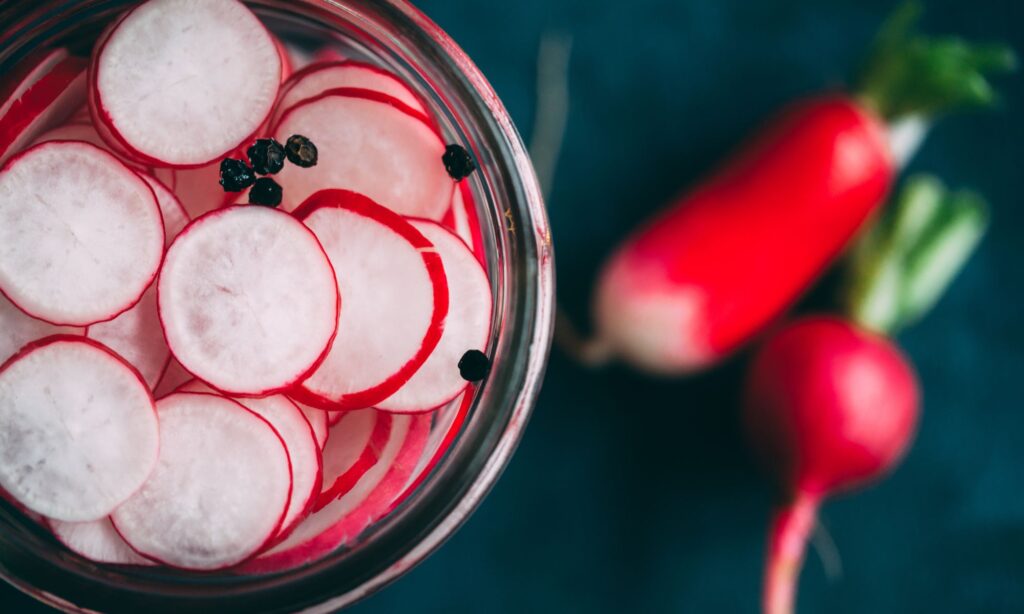
Now, I eat a few raw radishes as snacks, or enjoy them thinly sliced with cheese on crackers.
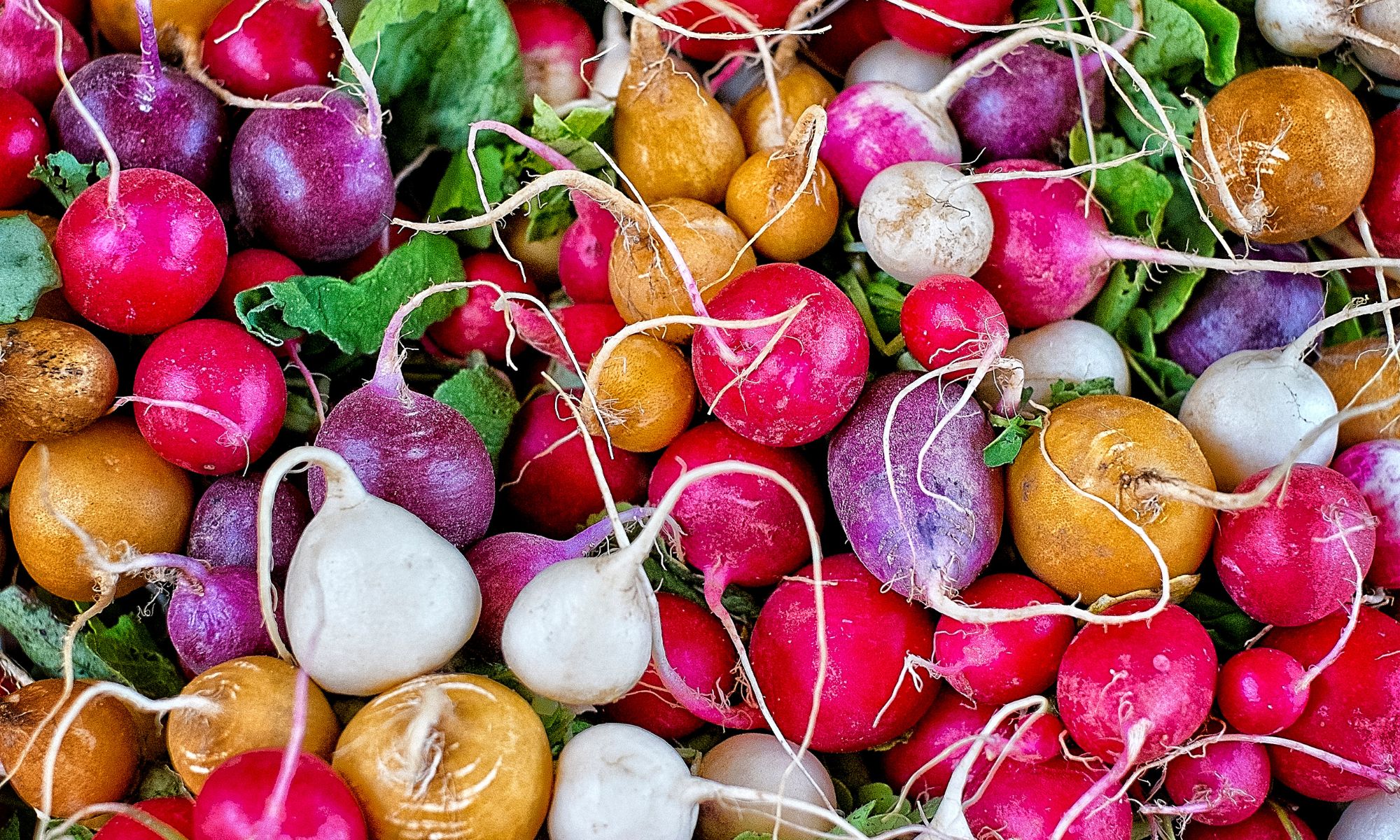
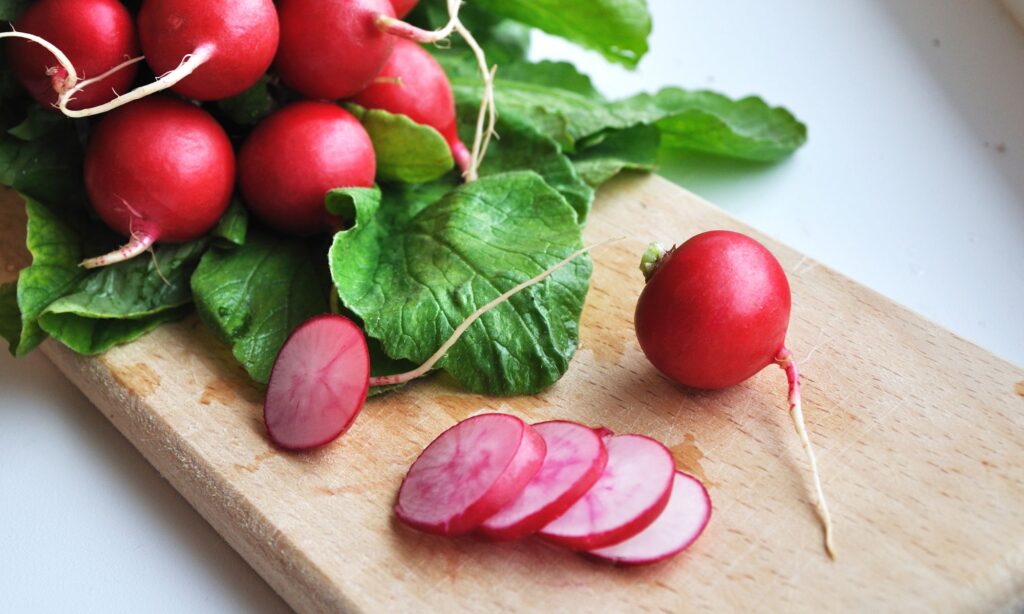
A cousin to cabbage, radishes are from the Brassicaceae family. They come in a variety of sizes, from half the size of a golf ball to up to 100 pounds. Shapes are round, tapering, and cylindrical. Colors range from the red, round ones with white interiors we’re most familiar with that proliferate in spring, to others, dark grey/black, purple, two-tone green, yellow, pink, and white.
We can trace the radish back to 2,700 B.C. to Egyptian historical records, where before the discovery of olive oil, Egyptians used radish oil in their diet. Greeks so highly regarded this root they paid homage to it with golden replicas. The Romans preserved the radish by using a paste made of honey, vinegar and salt. Eventually its usage spread throughout Europe, and by 1629 radishes were grown in Massachusetts.
Currently, radishes make up roughly two percent of the world’s vegetable production; about seven million tons are produced each year. Americans consume 400 million pounds.
A radish carving competition has been held in Oaxaca, Mexico every year since 1897. In Japan, daikon is one of the plants that make up the Japanese Festival of Seven Herbs on the seventh day after the new year.
Nutritional Benefits of a Radish
- Source of vitamin C. This vitamin helps fight diseases by rescuing healthy cells from an onslaught of free radicals, which contribute to the causation of chronic health problems such as cardiovascular and inflammatory disease, cataracts, and cancer.
- Provides Fiber. Fiber keeps your system flushed and functioning with regularity and aids in maintaining a healthy weight. Radish is a low-carbohydrate, non-starchy vegetable.
- A Natural Diuretic. Radishes purify the kidney and urinary system and relieve inflammation.
- Contains Detoxifying Agents. Phyto-chemical indoles and compound sulforaphane may potentially fight cancer.
- Provides Minerals and Vitamins. Minerals include potassium, calcium, sodium, iron, magnesium, phosphorus, and zinc. The vitamins are B vitamins (thiamin, niacin, riboflavin, folate, and vitamin B6), vitamin A, and vitamin K.
- Mostly Composed of Water. They are a great natural agent to keep your body hydrated.
Types of Radishes
- Black Spanish – Very round with coal-black skins and pure white flesh.
- Cherry Belle – One-half the size of golf balls. Round, red with white flesh.
- China Rose – One of the oldest types, very hardy. Roots up to 5 inches in length. Rose color. Easy to grow, does beat in mild climates.
- Chinese Green Luobo – Also called Qinluobo. Heirloom variety. Lime-green skin, lime-green flesh.
- Chinese Red Meat – Whitish-green skin, red flesh. Gets up to 4 inches in diameter. Crispy, sweet taste.
- Crimson Giant – Globe-shaped, average diameter of 1.5 inches, can average over 6 inches in height. Bright red. Mild, crispy taste. Mature in roughly 30 days.
- Daikon Long White – Can get up to 18 inches in length, 3 inches in diameter. Although usually cooked, Daikon is also excellent eaten raw and in salads.
- De 18 Jours – Round to cylindrical. Red with white tips. Juicy taste with crisp texture. Easy to grow in most locations. Mature in roughly 18 days.
- Early Scarlet Gold – Round-shape. Red skin, white flesh. Tender and juicy flavor. Heirloom variety.
- Easter Egg – A Variety of colors including pink, red, white, and purple. Looks and tastes best when cut very thin.
- Fire and Ice – Oblong-shaped. Bright red top half and white bottom half. Sweet, mild with delicate flavor and texture.
- French Breakfast – Oblong-shaped. Red with white tip. From mild to pungent flavor. Extra-crunchy texture.
- French Dressing – Long and wide, roughly 2 inches in length and ¾ inch wide. Red with white tip, pure white flesh. Zesty, peppery taste. Harvested in roughly 24 days.
- German Giant – Cylindrical, somewhat oblong. Bright-red skin, snow-white flesh. Can get up to 14 inches in length. Slightly pungent flavor. Looks similar to carrot.
- Giant of Sicily – Can get up to 2 inches in diameter. Bright-red color. Heirloom variety from Italy. Easy to grow, matures early.
- Green Meat – Also called Misato Green. Green both outside and inside. Mild flesh but skin has uniquely spicy taste.
- Horseradish – Although not generally known, horseradish is a type of radish. Pungent but without the bitter aftertaste of horseradish bought in a jar. Harvested in the fall, can be stored all winter long. It can spice up stews and meat dishes.
- Malaga – Very round roots. Deep purple color, white flesh. Firm, crisp texture. Flavorful. Easy to grow. Mature in roughly 35 days.
- Perfecto – Bright-red skin, white flesh. Crisp, range from sweet, and mild to sharp, peppery taste. Matures in roughly 30 days.
- Philadelphia White Box – Heirloom variety. Dates back to late 1800s. Beige skin, white flesh. Reaches the size of golf balls. Mild taste, crisp texture. Matures in roughly 30 days.
- Pink Beauty – Fairly rare. Rose-pink skin. Crispy texture, sweet taste. Matures in less than 30 days.
- Purple Plum – Reaches 1.5 inches in diameter. Deep-purple skin, white flesh. Matures in roughly 28 days.
- Red Emperor Hybrid – Bright-red skin, bright-white flesh. Crispy texture, mild, slightly peppery taste. Matures in roughly 30 days.
- Sakurajima Mammoth – One of the biggest varieties. Could get up to 100 pounds. Sweet, mild taste.
- Saxa 2 – European variety. Smooth, round shape. Bright red. Crispy texture. Matures in just 18 days.
- Sichuan Red Beauty – Long, slender. Red inside and out. Perfect for salads and pickling. Sweet taste. Easy to grow especially in cool climates.
- Singara Rat’s Tail – Instead of edible root, this radish has bean-like seed pods, which are edible. Delicacy in places like India. Can get up to 14 inches in length. Easy to grow.
- Sparkler – Round. Red with white tip. White flesh.
- Summer Cross Hybrid – Looks like long carrot. Gets up to 12 inches in length. White outside and inside. Asian variety. Crispy texture, mild taste. Matures in roughly 45 days.
- Watermelon – Heirloom variety. White skin, reddish-purple flesh. Slightly peppery taste.
- Grows to size of small watermelon, roughly the size of a baseball.
- White Beauty – Small. White outside and inside. Juicy texture, sweet flavor.
- White Globe Hailstone – White outside and inside. Both mild and spicy.
- White Icicle – Bright white. Gets up to 8 inches in length. Very pungent flavor.
- Zlata – Gold color. Silky texture, a bit spicy. Easy to grow. Matures in roughly 30 days.
How to Enjoy A Radish
- Besides slicing radishes into your favorite salad you can nutritionally enhance your greens by using their leaves.
- Thin radish slices can add zest to most any type of sandwich. Use radish sometimes instead of crackers for your spreads.
- Saute them with garlic, herbs, with or without, cheese.
- Grated they can be part of a salad with carrot, beet, or alone, with olive oil and balsamic, or added as a stuffing in tacos.
- Grill them using olive oil, salts and herbs and serve as a side dish with beef/chicken/pork or fish steak.