Category: Tips and Blogs

  • How Can an Impaired Digestive System Lead to an Autoimmune Disease?

    How Can an Impaired Digestive System Lead to an Autoimmune Disease?

    The digestive process begins in the mouth, which is the first step of the digestive system. When a person sees, smells, and starts chewing food, digestive juices from the salivary glands begin to be released in the mouth and a signal is sent to the stomach to begin releasing its juices. This explains the importance of chewing your food well, releasing more digestive enzymes to assist the mechanical breaking down process.

    When the mouth is finished with its job of reducing the food into a mass (bolus), the mass moves down through the esophagus to the stomach. This is a key area for protein and connective tissue digestion, destruction of parasites, yeasts, viruses, bacteria, and general disinfection. If the stomach acids (hydrochloric acid- HCL) are not strong enough (1.5 -3.0 ph), pepsin and gastrin will not be activated, proteins will not be broken down into the right form and the mass of bad pathogens will make their way into the inner chambers of the body.

    HCL is rather important in its function within the digestive system.

    Most people are low in HLC. The co-factors to make this key ingredient are zinc, B1, B6, and vitamin C. These co-factors are often depleted in most people.

    What happens with undigested proteins?

    The small intestine is the place where the nutrients are passed into the bloodstream. When the stomach acid gets to a certain low point the pyloric valve opens to allow the mass, now called chyme, into the small intestine. If the acid is not low enough, and the pyloric valve is not signaled, the next round of food will push the earlier chyme (digested or not), through the valve into the small intestine. This is where the trouble begins.

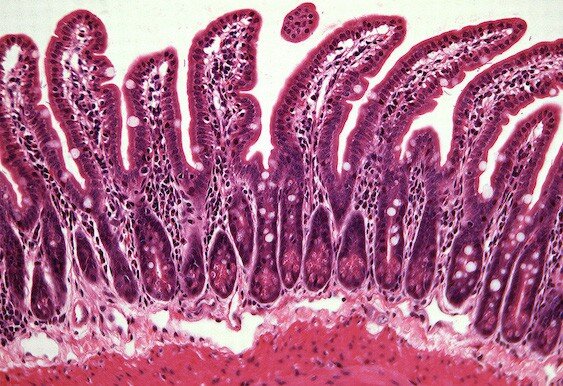
    The proteins are meant to be in a microscopic form and absorbed through the macrovilli and villi of the intestinal walls without disrupting them. The short and medium-chain fatty acids are absorbed right into the bloodstream. The long-chain fatty acids require the assistance of bile before they can be absorbed. Carbohydrates are broken down into glucose molecules and then absorbed here as well. But the proteins that are mis-formed, and too large, confuse the whole process. These are no longer nutrients, they have turned into troublemakers and weaken the epithelial lining of the intestinal wall creating a “leaky gut syndrome”.

    The immune system does not recognize proteins in this new form and reacts by causing the immune system to produce antigens and trigger an immune response. This immune response is what causes inflammation in the body. When this begins to happen repetitively, the immune memory system becomes confused and the proteins begin to resemble the molecular tissue structure of the body. Self-tolerance begins to break down and the body begins to attack itself. The inflammation cycle permeates the body.

    Bacteria gone awry, viruses, fungus, parasites and other pathogens that did not get destroyed by the stomach acid end up in the large intestine where they will begin to populate. The large intestine is a place where the microbiome (the bacterial population), plays a role in the immune system. There must be a balance of the duties that each bacteria is responsible for. The so called “bad bacteria”, even have a job to do, they have just gotten out of control. In the colon, the friendly bacteria is meant to nourish the walls, produce vitamins such as Vitamin K, B1, B2, B12 and butyric acid.

    Unfortunately, if the misguided bacteria begins to overwhelm them, the beneficial bacteria can no longer do their jobs. This results in dysbiosis, when the pathogenic bacteria is in charge and outnumbers the friendly beneficial bacteria. The immune system is overwhelmed. Immune is also dealing with the inflammation from the antigens and it does not have the assistance of its army to put out so many fires throughout the body. This is how autoimmune disease begins.

    Shelley H. Lane, OMD, L.Ac, NTP.
    www.purefoodsdoctor.com

    shelleylaneomd@gmail.com

  • Water is Life

    Water is Life

    Water is the most precious substance on earth; we cannot live without it. Besides providing us with visual delights such as spectacular waterfalls and breathtaking oceans, it contributes to our food, provides recreation, and nourishes us in countless ways. Water sustains us both outside of our bodies and inside. Sadly, this most essential carrier of life force is typically taken for granted. We often do not realize our body’s craving for it unless we feel thirst, yet it makes up nearly 2/3 of the body’s mass and 70% of the brain. Most of the volume of our cells and body fluids are water. The Oldham County Water District’s website has an extensive number of important fact about water, including the fact our kidneys recycle 400 gallons of water per day. Water is the most common nutritional deficiency in the US. Let’s face it- we’ve got to start taking our water seriously.

    Fereydoon Batmanghelidj, M.D., an internationally renowned researcher, author and advocate of the natural healing power of water, believes that most of our body’s ills are due to dehydration. Simple as that! He advocated that we should first just drink the optimal amount of water before using medications. In other words, he believes in and promotes preventative medicine.

    We have been such a drug culture the last 50 years or so, that sometimes we do not notice modalities that are the obvious ones. The concept of starting from the basics and then working up to more complex solutions has been forgotten.

    I remember as a child, being put in a cold bath to bring down a high fever. Nowadays, parents are instructed to start with “fever meds”. Other common sense recommendations like getting enough sleep, eating well, and getting exercise, have been thrown aside for the medication to “cure” the ailment. Let us focus more on how we got there and try to rebuild better habits.

    Roles of Water

    1. Maintains correct electrical properties of the cells

    2. Transports nutrients throughout the body

    3. Provides moisture to oxygen for respiration

    4. Assists delivery of oxygen to the cells

    5. Provides a cushion for bones and joints

    6. Regulates body temperature

    7. Helps to expel toxins and wastes

    8. Absorbs shock to joints and organs

    9. Lubricates joints

    10. Prevents tissues from sticking

    11. Enhances communication between cells

    12. Sustains the body in its healing process

    Did you know that drinking coffee, black tea or soft drinks, does not count as water? In fact, those beverages actually dehydrate us and it is recommended that we replenish our bodies by drinking 1 ½ times the amount in water to compensate for the dehydrating beverage. There is probably no other substitute for water besides perhaps uncaffeinated herbal tea (except for peppermint which dehydrates). It’s OK to drink these dehydrating beverages (although I would not recommend soft drinks), just follow up with 1 ½ times the water.

    It is important to note that there is lack of clean water. Our waterways have been polluted, so we have to filter our water in order to have a safe product. Already, our bodies are struggling with the toxic load from the environment, so, at the very least, the water we drink should be as pure as possible. The liver is constantly detoxifying anyway, drinking polluted water just gives it more work to do. It really does a body good to use as few chemicals in foods, cosmetics, cleaning products, yard products, as possible to give the liver a helping hand.

    This probably dates me, but I do remember drinking water out of running streams. The only criteria, was that the water had to look clean and be running. You would not even think of doing that now, even if you were high up in the Sierra’s. No experienced backpacker leaves home without a very sophisticated water filter.

    We trust our “water companies” to provide us with clean water but those who have studied the matter know that the water quality is borderline; just purified enough to prevent major epidemics. When tested, you will find all kinds of unfriendly creatures residing in your municipal water. Consider the situation in Flint, Michigan, and it is clear that it comes down to money.

    Some of these things may lurk in your water:

    Arsenic, chlorine, bacteria from human waste (sewage, run-off), fluoride, nitrates, pesticides, herbicides, radon, chloramines, etc. Don’t lose hope though, because they can be removed with a good filtration system.

    The bottom line is that in this day and age, we simply have to look out for ourselves. I do not recommend buying water from plastic bottles, as they are known to contain BPA (a hormone disrupter) and other chemicals that we could do without.  Of course, sometimes you are out and about, or traveling, and there is no other recourse. The harder plastics leach less, so they could be an option if necessary. The best option is to invest in some stainless steel water bottles and bring your own water. Don’t forget to keep an ice chest in the car when the weather turns warm.

    You will be happy to have that nice cool water to keep you hydrated.

    There are several reputable water filters out there depending upon your living situation. There are counter –top, under the sink and pour through varieties. The purifier technologies include reverse osmosis, gravity filters, ceramic filters., etc. If you use the reverse osmosis system (RO), it is best to add a pinch of good quality sea or mineral salt to your glass; such as Celtic Salt, Himalayan, Real Salt. Since most of the minerals are removed in that process they need to be replaced. That is why I would not recommend distilled water, except for specific circumstances.

    Check out this presentation on filtration alternatives and systems at www.HealingQuest.tv

    I would also recommend a very informative article, by Norm LeMoine, of Radiant Life Catalog, “Sewage in a Glass? Technologies for Cleaner, Safer Water“, in the Wise Traditions publication of the Weston A. Price Foundation. (Winter issue 2014)

    Here are some options for water filtration and purification systems.

    doultonusa.com

    radiantlifecatalog.com

    www.mercola.com

    www.berkeyfilters.com

    Summing Up Recommendations

    1. Drink ½ your body weight in ounces everyday of filtered water.

    2. Replace the plastic water bottles for your own glass or stainless steel container. Find a suitable water purification system for your home and work.

    3. If you have pre-filled your bottles you can tell how much water you are drinking.

    4. Add lemon, orange, berries, cucumber slices, mint leaf, or whatever to water to spice it up (especially for children who are used to sugary drinks)

    5. Do not drink too much water with your meals, it will dilute your gastric juices.

    6. Keep an ice chest in your car to keep water cool when you are out and about.

    7. When traveling and you do not have your personal water bottle with you, try to buy the harder plastic bottles or glass. Mountain Spring Water (green bottle), is a safe brand.

    8. Add a pinch of good quality salt to your glass or bottle, especially if using RO water system.

    9. Try to train children at an early age that they do not need these sweet concoctions if they are thirsty. Water is the best. Use other drinks like smoothies, fresh pressed juices, coconut water, kombucha, and kvasses.

    Remember to Stay Hydrated For Good Health.