Tag: #Belmont

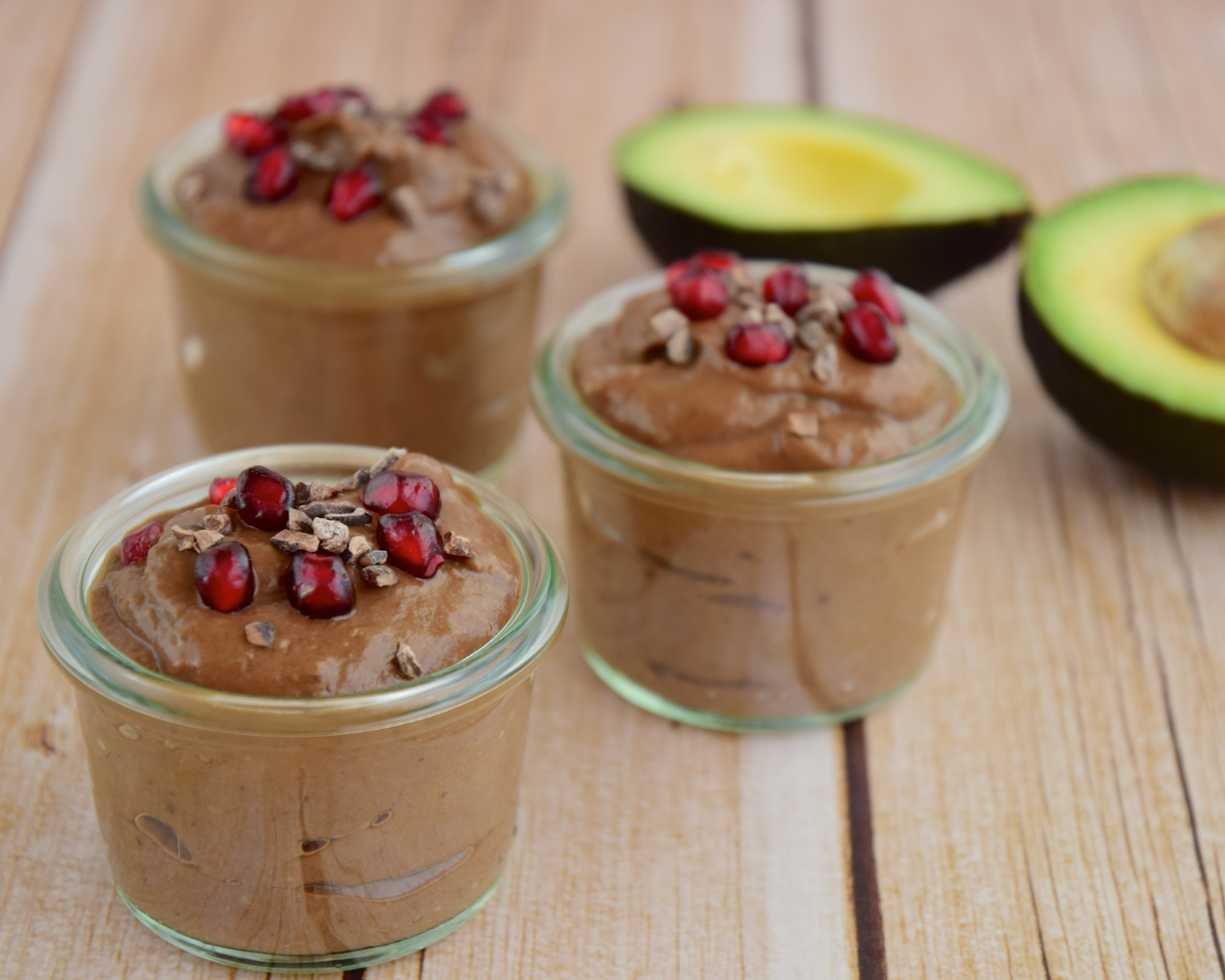
  • Avocado Chocolate Mousse

    Avocado Chocolate Mousse

    In this Avocado Chocolate Mousse recipe, feel free to experiment with the amount of cacao/cocoa and sweeteners.

    Yield: 2-3 servings

    Ingredients

    • 2 ripe avocados
    • 2-4 tbsp. cocoa or cacao powder
    • 2-3 tbsp. grade B maple syrup
    • ½ tsp. vanilla extract
    • Pinch of salt, optional
    • Garnish: cacao nibs, berries, chopped nuts

    Avocado Chocolate Mousse Directions

    1. In the bowl of a blender or food processor, blend avocado until smooth. Add all other ingredients, blending until mixture is uniform. Chill for about 2 hours in the fridge or half an hour in the freezer.
    2. Garnish.
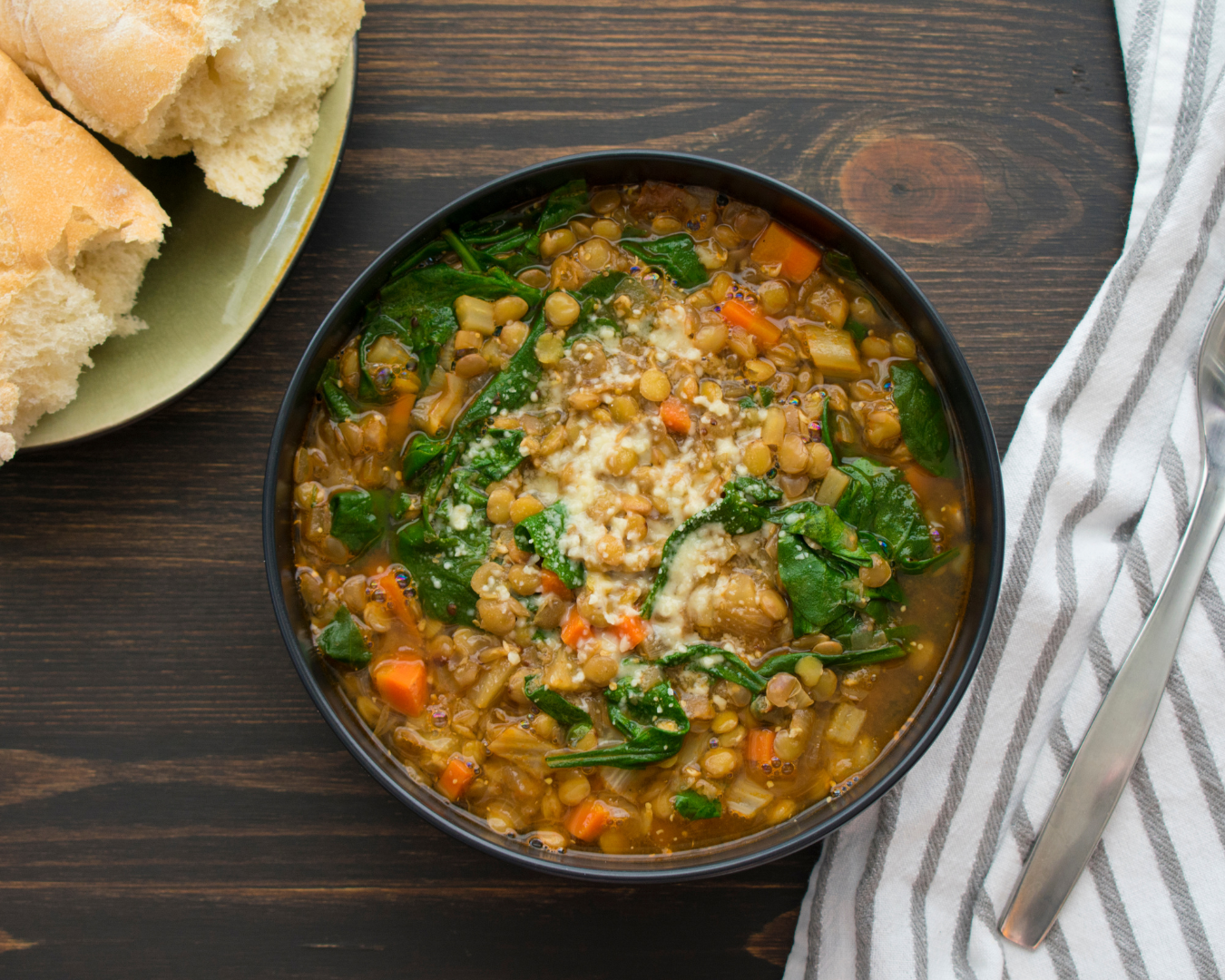
  • Soup Recipe: French Lentil and Spinach for a Hearty, Healthy Meal

    Soup Recipe: French Lentil and Spinach for a Hearty, Healthy Meal

    Soup is the ultimate comfort food — warm, filling, and endlessly versatile. This French Lentil and Spinach Soup brings together earthy lentils, tender greens, and fragrant herbs for a satisfying bowl that’s both nutritious and delicious. Whether you’re craving something cozy or prepping meals ahead, this soup is sure to hit the spot.

    Ingredients

    • 2 tablespoons coconut oil or ghee
    • 1 large yellow onion, finely diced
    • 1 large or 2 smaller carrots, finely diced
    • 1 small fennel bulb, finely diced (or 1 large celery stalk)
    • 2 garlic cloves, minced
    • 1 tablespoon prepared mustard (I used stone-ground)
    • 2 tablespoons tomato paste (optional)
    • 1/2 cup red wine
    • 1 1/2 cups French green lentils de Puy, optionally soaked for 12-24 hours (with a pinch of baking soda or salt)
    • 1 bay leaf
    • 6 – 8 cups vegetable stock, chicken stock or water (I used my homemade chicken, or bone broth)
    • salt and black pepper
    • 4-6 cups loosely packed baby spinach leaves, or other greens, washed
    • parmesan, for serving

    French Lentil and Spinach Soup Directions

    1. In a large soup pot, heat the oil over a medium flame until is shimmers. Add the onion, carrot, and fennel (or celery), and sauté, stirring occasionally, until the onion is tender and translucent, about 10 minutes. Add the garlic, and cook, stirring, until fragrant, 1 minute, being careful not to let it burn. Add the mustard and tomato paste. Cook, stirring, until it forms a film on the bottom of the pan, 1-2 minutes.
    2. Add the red wine, scrape up all the good stuff from the bottom of the pan, and let the mixture simmer until slightly thickened, 2 minutes. Drain the lentils if soaked, and add them to the pot along with the bay leaf and stock or broth (use the smaller amount if the lentils have been soaked). Cover and simmer for 30 minutes.
    3. Add 1 1/2 teaspoons of salt (less if your stock is salted) and continue to cook, covered, until the lentils are very tender, about 10 minutes. Green lentils hold their shape well, so if you see some beginning to fall apart, the soup is probably done.
    4. Stir in the spinach leaves and simmer until wilted, 1-2 minutes. Or, if you’re not serving all of the soup right away, save the spinach leaves and add them as you heat up individual portions of soup. This soup can also be frozen.

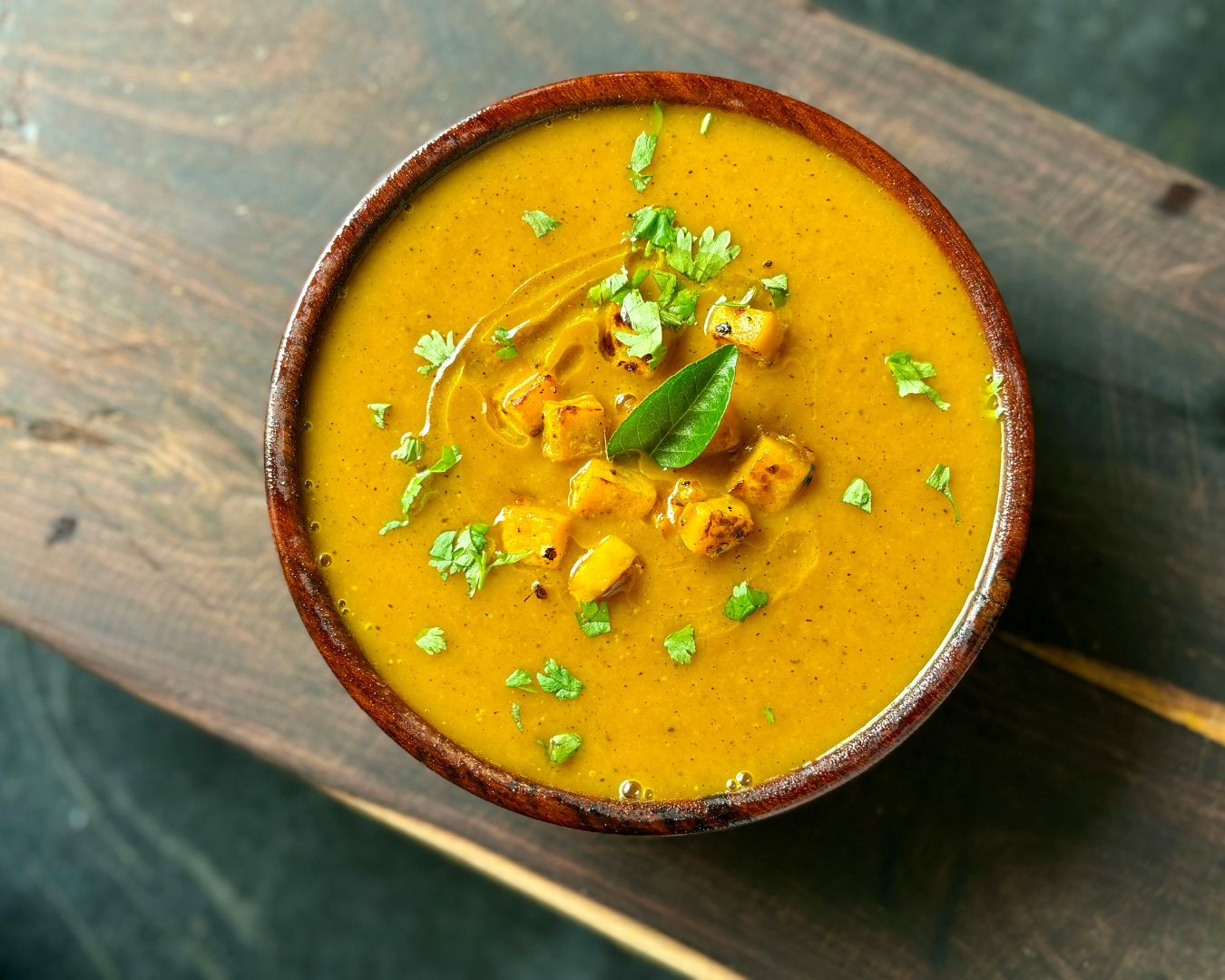
  • Curried Pumpkin Apple Soup

    Curried Pumpkin Apple Soup

    This Curried Pumpkin Apple Soup makes 6 servings.

    Ingredients

    • 2 tablespoons butter
    • 1 cup chopped onion
    • 1 cup chopped celery
    • 1/2 large apple, peeled, cored, and chopped
    • 2 teaspoons mild curry powder
    • 3 cups chicken broth
    • 1 1/2 cups solidly packed pumpkin mash
    • 1/4 teaspoon salt, plus more to taste
    • 1 whole bay leaf
    • 1/3 cup heavy cream
    • 2 to 3 tablespoons honey or maple syrup
    • Sour cream or crème fraiche and chives, for garnish (optional)

    Curried Pumpkin Apple Soup Directions

    1. Melt the butter in a medium-size soup pot. Stir in the onion, celery, and apple. Partially cover the pot and sauté the ingredients over medium-high heat until the onion is clear, about 8 minutes. Stir in the curry powder and sauté the mixture for another minute. Stir in 1 cup of chicken broth and cook it for 1 minute more.
    2. Pour the contents of the pan into a blender or food processor, add the pumpkin, and puree the soup until it’s smooth.
    3. Pour it all back into the pot, then stir in the remaining chicken broth, the salt, and the bay leaf. Set the soup over medium-high heat and bring it to a simmer, stirring occasionally.
    4. After 5 minutes, stir in the heavy cream and 2 tablespoons of honey. Taste the soup, adding more salt or honey if necessary to get the desired balance of sweet and savory. Simmer it for 2 minutes more, remove the soup from the heat, and serve it hot.

      For a pretty — and tasty — touch, garnish each bowl with a dollop of sour cream and a sprinkling of chopped chives.

  • Magically Moist Almond Cake

    Magically Moist Almond Cake

    (This moist almond cake is mostly from Bob’s Redmill with alternatives in parenthesis.)

    Ingredients

    • 1 ½  Cup Almond flour (Bob’s not best)
    • 1 cup sugar (I used ½ cup coconut sugar, maple syrup also good)
    • 4 eggs
    • ½ cup milk
    • 1 t. Vanilla extract (I’ve also used paste)
    • ¾ cup butter unsalted (prob better with, but I used coconut oil melted)
    • ½ cup organic coconut flour
    • ½ t. salt 
    • 2 t. Baking powder
    • ¼ cup or more cocoa nibs (can be creative w walnuts, raisins, or chocolate chips)

    Moist Almond Cake Directions

    1. Preheat oven to 350 degrees F.
    2. Grease 9 X 12 inch pan (I used coconut oil, but butter is fine too). Cream together butter and sugar until smooth (after coconut oil cools, if using).
    3. Add eggs, beat until fully blended.
    4. Add milk, vanilla to combine.
    5. Mix dry ingredients in a separate bowl (I used a food processor).
    6. Then add wet ingredients to dry, mix well, and then add additions (cocoa nibs, or).
    7. Mix briefly, then spread out on a greased pan. Bake for 30 minutes. 
    8. Can serve with whipped cream, fresh berries or plain. 
    9. Enjoy, healthy low sugar dessert! 🙂

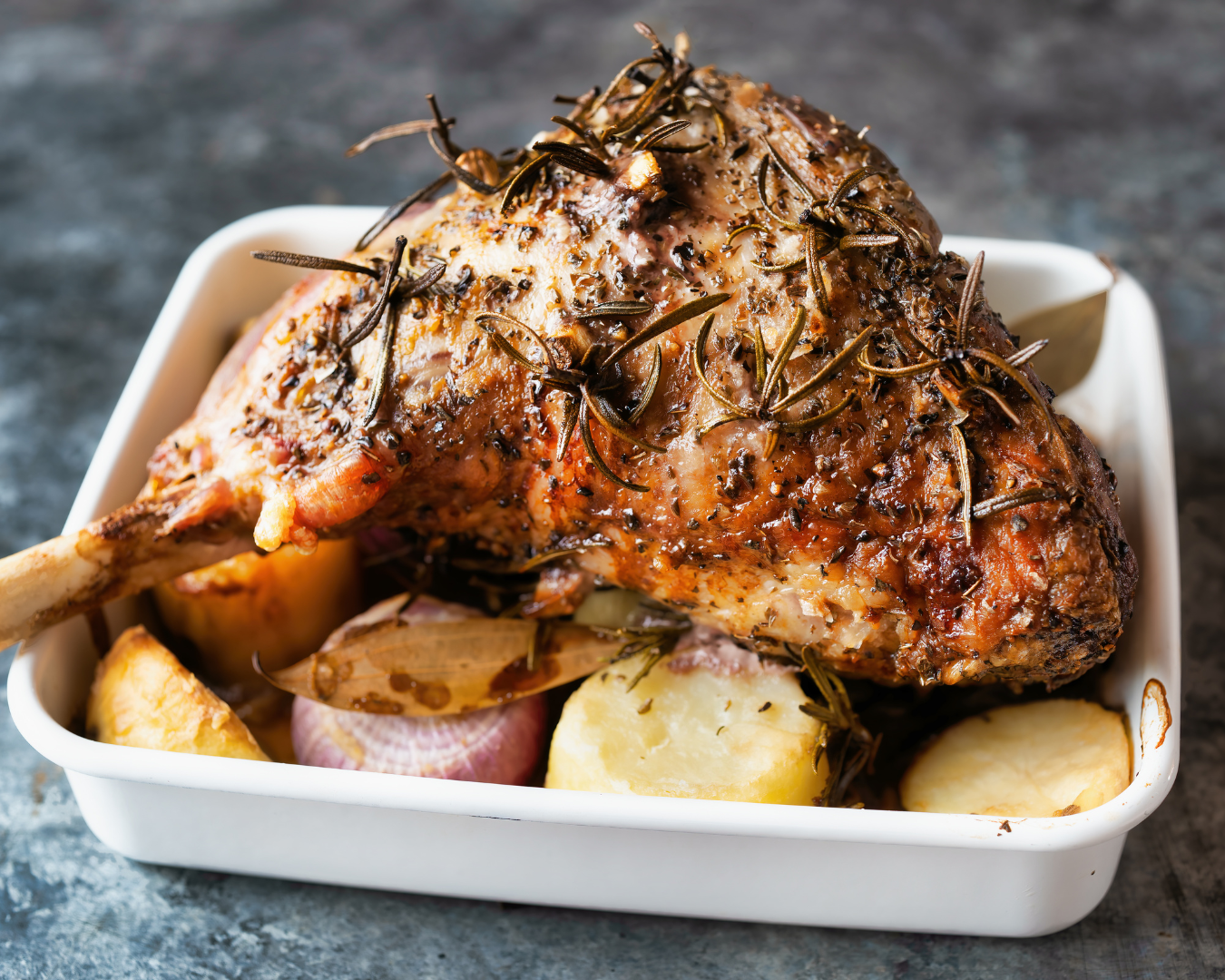
  • Greek Leg of Lamb

    Greek Leg of Lamb

    Succulent, aromatic, and rich with Mediterranean flavor, this Greek Leg of Lamb is a showstopping centerpiece for any special meal.

    Servings

    • For 8 Person(s)

    Ingredients

    • 7 pound(s) Organic free range leg of lamb
    • 0.5 cup(s) Cold Pressed Organic Olive Oil
    • 6 Organic cloves of garlic
    • 1 Organic lemon – large
    • 1 teaspoon(s) Organic Thyme (more if desired)
    • 1 tablespoon(s) Organic Oregano (more if desired)
    • 1 teaspoon(s) Sea salt (more if desired)
    • 1 teaspoon(s) Pepper (more if desired)
    • 1 Large organic onion diced
    • 8 Organic Carrots, cut into 2 in pcs
    • 8 Organic celery stalks, including the leafy tops, cut in 2 in pcs
    • 8 Organic small red potatoes
    • 0.5 pound(s) Organics Green beans (optional)

    Greek Leg of Lamb Directions

    1. Place the leg of lamb into a large roasting pan with a lid.
    2. Pour olive oil over the lamb
    3. Pierce the meat slightly and insert whole cloves of garlic.
    4. Squeeze fresh lemon juice over the meat.
    5. Season with Oregano, Thyme, Salt & Pepper.
    6. Cook at 400 degrees for 30 minutes, uncovered, to brown the meat.
    7. Place vegetables around the leg of lamb.
    8. Turn oven down to 350 degrees for approx. 1 hour (for a 6 to 7 lb. leg of lamb) or until meat thermometer reads 145-150 degrees. Be careful not to touch the bone with the thermometer.
    9. Remove from oven and allow to rest for 10 minutes.
    10. Carve and serve straight out of the pan.
    11. Save bones for bone broth (optional).

    Credit: Delicious Authentic Greek leg of lamb recipe.

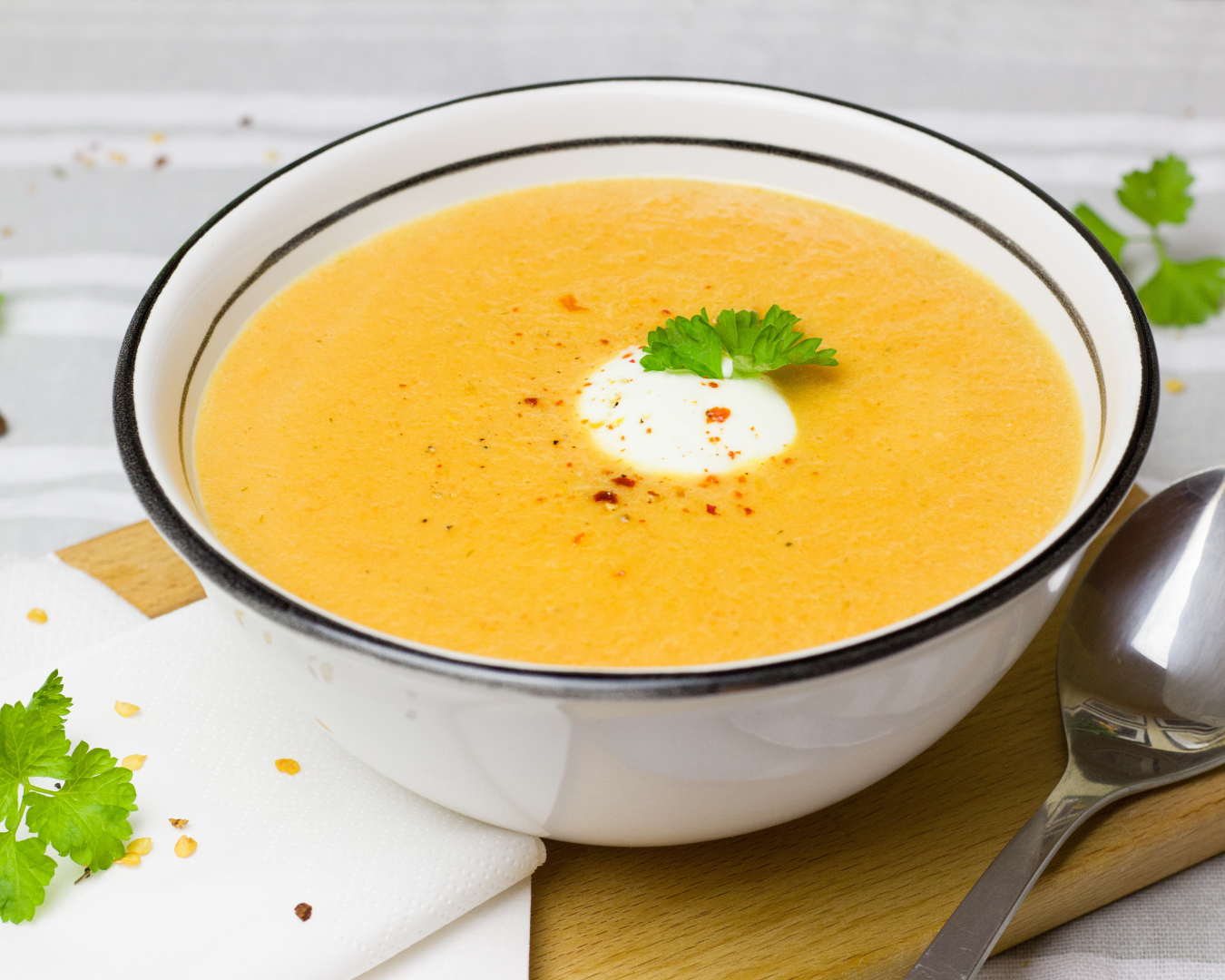
  • Carrot Lemon Ginger Soup

    Carrot Lemon Ginger Soup

    Bright, warming, and full of flavor, this Carrot Lemon Ginger Soup is the perfect blend of sweet, spicy, and citrusy. It’s a simple, wholesome recipe that’s as comforting as it is refreshing — ideal for any season.

    Ingredients

    • 2 Tbs grass-fed butter
    • 6 cups chopped carrots
    • 2 yellow onions chopped
    • 2 lemon thyme sprigs (or regular thyme)
    • 4 cups homemade broth
    • 1.5 cups filtered water
    • 2 tsp freshly grated ginger
    • fresh lemon juice to taste
    • yogurt or sour cream to garnish if lactose isn’t an issue
      salt

    Carrot Lemon Ginger Soup Directions

    1. Add butter to large pot. saute onions until soft
    2. Add carrots for 5 mins
    3. Add broth and water and bring to boil
    4. Let simmer for 30mins
    5. Add ginger and stir
    6. Let cool and transfer to blender (or use immersion blender)
    7. Add salt and lemon juice to taste
    8. Garnish with yogurt or sour cream if desired

      Variation: Use cilantro instead of lemon and ginger. Add a large handful to the soup before blending.

  • Winter Care: Balance Your Body, Nourish Your Soul

    Winter Care: Balance Your Body, Nourish Your Soul

  • Acupuncture for Digestive Health

    Acupuncture for Digestive Health

    What is Acupuncture?

    Your body is like land with a series of streams running through it. In Traditional Chinese Medicine theory (diagnosis, acupuncture, herbs, moxibustion, cupping) these streams are represented as channels of energy called meridians.

    You can’t see energy (maybe under LSD), but you certainly can feel it. When you’re feeling good, you say you have “high energy,” and when you’re under the weather, you say your energy is “low.”

    When a beaver builds a dam in a stream, the water flow is blocked or diverted. It’s the same with your channels of energy. Your energy can be blocked because your organs aren’t functioning at optimum levels.

    Acupuncture is a method of encouraging your body to heal itself by correcting the imbalances of energy (qi or chi) in your meridian system. Your acupuncturist facilitates this healing by inserting needles in certain key locations along your meridians.

    Dr. Andrew Weil, an integrative medical doctor, says the benefits of acupuncture can extend to a wide variety of conditions, from emotional disorders (anxiety, depression) to digestive complaints (nausea, vomiting, irritable bowel syndrome). It’s also useful for pain syndromes due to an injury or associated with chronic degenerative diseases such as rheumatoid arthritis.

    Acupuncture is also helpful in treating neurological problems like migraines or Parkinson’s disease or as a rehabilitation strategy for individuals who suffered a stroke. Respiratory conditions, including sinusitis and asthma, have been relieved with acupuncture, as have many gynecologic disorders and infertility. Acupuncture has also proved beneficial for reducing fatigue and addictions, and for promoting overall well-being.

    An acupuncturist, L.Ac., with a three-to-four-year schooling, is licensed upon completion of an exam administered by The Board of Medical Quality Assurance in California. An oriental medicine doctor, O.M.D., has obtained advanced training.

    Elite Athletes Use Acupuncture

    The elite athletes in the National Basketball Association have been using acupuncture for decades to protect their bodies and maximize their effectiveness on the court. These athletes use acupuncture for relieving pain, loosening muscles, and reducing swelling.

    In “USA Today Sports” (Dec. 30, 2017, Alex Kennedy) Shaquille O’Neal, famously of the Los Angeles Lakers, first tried acupuncture in 2002 when his big toe started acting up before the playoffs. With his healed toe from acupuncture, Shaq led his team that year to their third straight championship. Shaq said, “I’ve always been a connoisseur of ancient medicine.”

    Acupuncture for Digestive Healing

    Using acupuncture for digestive problems works by reducing inflammation of the stomach, along with its related organs, the small and large intestine, and the pancreas. Acupuncture also releases and stimulates enzyme and hormone production in these organs.

    After a thorough medical history, your acupuncturist will explore all factors leading up to the onset of your issues, to discover the root causes of your body’s dysfunction.

    In addition to needling, your acupuncturist may prescribe Chinese herbs, supplements, and stress reduction techniques. Your acupuncturist may integrate food recommendations into your health program, which will be beneficial in the treatment of gastrointestinal problems.

    Your acupuncturist may use moxibustion – a technique of applying warm mugwort to acupuncture points – while you lie in a state of complete relaxation during your treatment. This herb is used as an anti-inflammatory agent and to correct imbalances.

    Cupping is another technique used in traditional Chinese Medicine in which your acupuncturist puts special cups on your skin for a few minutes to create suction. This technique helps reduce pain and inflammation, while it increases blood flow and relaxation.

    Traditional Chinese Medicine can help resolve:

    • Ulcers
    • Constipation/Diarrhea
    • Indigestion
    • Food sensitivities
    • Inflammatory bowel conditions
    • Bloating/Distention/Burping
    • Lack of appetite/Excess hunger
    • General Gastritis

    You will be amazed at how well your body responds to proper nutrition with energy guidance. Try it out for yourself and get back to enjoying your meals!

    Shelley H. Lane, OMD, L.Ac, NTP.

    www.purefoodsdoctor.com

    shelleylaneomd@gmail.com

  • Why Real Food?

    Why Real Food?

    Real Food is simply food in its original form. That means that nothing has been added to it or subtracted from it. It comes in the form that nature created it.

    The evolution of our food has disconnected the populous from its source.  Many people in today’s world no not from where their food comes.

    The organic food movement began as a result of the use of synthetic nitrogen fertilizers and pesticides in the early days of industrial agriculture. http://theorganicsinstitute.com/organic/history-of-the-organic-movement/. Later on,  there were people such as Rudolf Steiner who developed biodynamic agriculture, an organic farming method http://www.rudolfsteinerweb.com, Alice Waters, was a pioneer of the organic food movement in the US and the originator of the infamous Chez Panisse Restaurant in Berkeley. Weston A. Price, a dentist in the 1930’s, traveled the world and discovered that indigenous people who consumed only pure nutrient dense traditional foods, were far healthier than the western population www.wapf.com, The slow food movement was also a group evolved in reaction to our changing food economy.  http://www.slowfoodusa.org.

    These people were lovers of food and knew the difference between real food and man-made synthetic substances. Not only is the taste superior, there are actual biochemical and nutritionally beneficial reasons for the choice to eat real food. Our bodies know the difference and cannot really absorb synthetic vitamins (not recognizable)

    Each and every one of our bodily functions are dependent on particular nutrients. In order to sustain good health, the essential nutrients from pure foods are necessary

    As the native people of Dr Price’s investigation displayed, a diet rich in what was in the surrounding environment, unspoiled and in its pure form, provided them with all that they needed to be vibrant and healthy. In fact, Dr, Price, was particularly interested in their teeth, and surmised that the problems with the teeth of populations that consumed a “western diet”; deformed dental arches, dental caries, crowded and crooked teeth, were a result of nutritional deficiencies. He also discovered that with the straight and strong teeth came healthy bodies, strong immune systems and healthy minds.  

    One must realize the connection between organic agriculture, which contributes to growing healthy and sustainable food, and our health. It is a circle. The microorganisms and trace minerals are key to the health of the soil and then in turn the nutrient value of the food. The use of only 2 ingredients in a synthetic fertilizer, reduces most of the essential nutrients that our bodies require. The addition of pesticides and herbicides contributes to the toxic load that our bodies have to deal with. 

    If we examine the reduction of traditional “homemade” foods in our culture, we see a direct relationship between that and the declining health of the western world. The modern diet in mostly comprised of processed grains made into different products. These products have been stripped of their essential nutrients, Examination of the ingredients listed you will see soy, wheat, sugar, corn and chemicals with names you could not pronounce.  It is always best to be able to identify what you are eating.

    We have been misled to believe that foods in their natural state are unhealthy and need to be reduced in fats, cholesterol, etc. Meanwhile,. healthy fats contain fat–soluble vitamins which are essential to our body function and necessary for optimal health.

    So let’s keep our food they way Mother Nature intended and enjoy the natural flavors the way they were meant to be. No need to reinvent the wheel!

  • Use Healthy Cooking Oils. Avoid Unhealthy Ones

    Use Healthy Cooking Oils. Avoid Unhealthy Ones

    The History of Cooking Oils

    Up until the 1950s, Americans used saturated or monosaturated fats to cook with –
    butter, lard, tallow, and coconut oil. Coronary heart disease was relatively rare.

    But in the late 50s, Ancel Keys came up with the Lipid (Fat) Hypothesis. Keys said that
    he proved a direct relationship between the amount of saturated fat and cholesterol in
    the diet and the amount of coronary heart disease. (It was discovered much later that
    Keys cherry-picked his data, causing his whole study to be flawed.)

    Because of the publicity he got, his idea stuck and opened the door for the industry to
    make vegetable oils with a proliferation of polyunsaturated fats. It also led to the low-fat
    and non-fat diet craze as people stopped eating butter and ate margarine instead.

    What happened since the 50s? The incidence of heart disease has skyrocketed to
    where today it is the number one killer of women and men. What changed? The
    American diet.

    Since the 1950s, dietary cholesterol increased by only 1%. However, the percentage of dietary vegetable oils in the form of margarine, shortening, and refined oils increased by about 400%. The consumption of sugar (to compensate for the lack of taste of low-fat) and processed foods increased by about 60%.

    Why are Polyunsaturated Fats Dangerous?
    Your body makes only saturated fat and monounsaturated fat. You must get
    polyunsaturated fat, an “essential fat,” from food such as walnuts. sunflower seeds, flax
    seeds or flax oil, and fish, such as salmon, mackerel, herring, albacore tuna, and trout.

    Polyunsaturated fats are only dangerous when they are processed from seeds in big
    industrial fat factories.

    Unlike coconut or olive oil, which can be extracted through a slow-moving stone press,
    seed oils like canola, soybean, and corn oil require a harsh extraction process.

    The large factories subject the seeds to high heat exposing them to damaging light and
    oxygen. Then, to extract the last 10% or so of oil, the processor treats the seeds with
    toxic solvents – usually hexane.

    This high-heat processing causes the fragile and unstable omega-3 linolenic acid in
    polyunsaturated fats to break apart creating dangerous free radicals. The process also
    destroys the antioxidants, such as fat-soluble vitamin E, which protects the body from
    the ravages of free radicals.

    If that isn’t horrifying enough, BHT and BHA, both suspected of causing cancer and
    brain damage, are often added to these oils to replace the vitamin E and other natural
    preservatives destroyed by heat.


    The Health Hazards of Cooking with Unhealthy Oils
     Vegetable oils are high in Omega-6 fatty acids, especially linoleic acid, which is a
    precursor to pro-inflammatory eicosanoids. These molecules can cause chronic
    inflammation and contribute to autoimmune diseases.
     Diets high in linoleic acid cause oxidative stress, mitochondrial dysfunction, and
    genetic damage. These factors are instrumental in promoting cancer.
     The Minnesota Coronary Experiment found that participants who increased their
    intake of corn oil had an 86% higher incidence of heart attacks.

    Unhealthy Cooking Oils


     Sunflower Oil
     Soy Oil
     Cottonseed oil
     Safflower oil
     Corn oil
     Rice bran oil
     Grapeseed oil
     Canola oil

    Healthy Fats and Healthy Cooking Oils

    After decades of being duped into eating unhealthy processed polyunsaturated fats,
    The American public got a wake-up call. In 2014, “Time” magazine ran a cover story, “Eat
    Butter: Scientists Labeled Fat the Enemy. Why They Were Wrong. “

    Sadly, we haven’t heeded the call because the idea of fat as public enemy number one
    is still deeply embedded in our culture. This belief persists even though eating a diet of
    refined carbohydrates and low or no-fat products has produced a population that is
    more than one-third overweight.

    In addition, type 2 diabetes has increased by 166% from 1980 through 2012.


    Here are just a few of The Healthy Cultures that Eat Saturated Fat
     India – Northern Indians consume 17 times more animal fat than Southern
    Indians have a 7% lower incidence of coronary heart disease.
     Eskimos – They eat liberal amounts of animal fat from fish and marine animals
    are free of disease and are exceptionally hardy.
     China – In a region in which the populace consumes large amounts of whole milk
    they have half the rate of heart disease than in regions eating small amounts of
    animal products.
     Okinawans – The average life span for women is 84, higher than in Japan. They
    eat generous amounts of pork and seafood and do all their cooking using lard.


    Unprocessed Cholesterol in Saturated Fats is Vital for your Health:
     Cholesterol is vital for the manufacture of balanced hormones that protect you
    from everyday stress. These hormones are protective against heart disease and
    cancer.
     Cholesterol is needed to make all the sex hormones including testosterone,
    estrogen, progesterone, and DHEA.
     The body needs cholesterol to properly use vitamin D, which is critical to all body
    systems including the bones, nerves, proper growth, mineral metabolism, muscle
    tone, insulin production, fertility, and strong immunity.
     Cholesterol acts as a powerful antioxidant in the body and protects it against free
    radical damage to the tissues.
     Cholesterol is needed by the liver so it can make bile salts, which are critical to
    the digestive process and absorption of dietary fats.

     The brain needs cholesterol to function properly. Cholesterol is used by serotonin
    receptors, serotonin being the body’s natural “feel good” chemical. Low
    cholesterol levels have been associated with aggressive and violent tendencies,
    depression, and suicide.
     Cholesterol is necessary for the proper functioning of the intestines and
    for maintaining the integrity of the intestinal wall, as well as all cell walls. Low
    cholesterol diets can lead to “leaky gut” syndrome and other digestive problems.


    Mother’s milk, the most perfect food on the planet, provides a higher proportion of
    cholesterol than almost any other food. It also contains over 50% of its calories as fat,
    much of it saturated fat.

    If your serum cholesterol levels are high, your body is sending cholesterol, acting as an
    antioxidant, to repair structurally weak blood vessels damaged by eating excess
    polyunsaturated fats.

    Healthy Cooking Oils
     Olive oil (at low heat only)
     Butter
     Ghee
     Tallow
     Lard
     Chicken/Duck Fat
     Red Palm Oil
     Coconut oil

    This discussion is another example necessary to maintain a healthy vibrant body. Eating
    healthy fats is akin to a slow-burning log burning for a long time versus kindling, which
    burns quickly. You will feel more satiated after each meal and for a longer period.
    Enjoy Your Fats!

    Shelley H. Lane, OMD, L.Ac, NTP.

    www.purefoodsdoctor.com

    shelleylaneomd@gmail.com