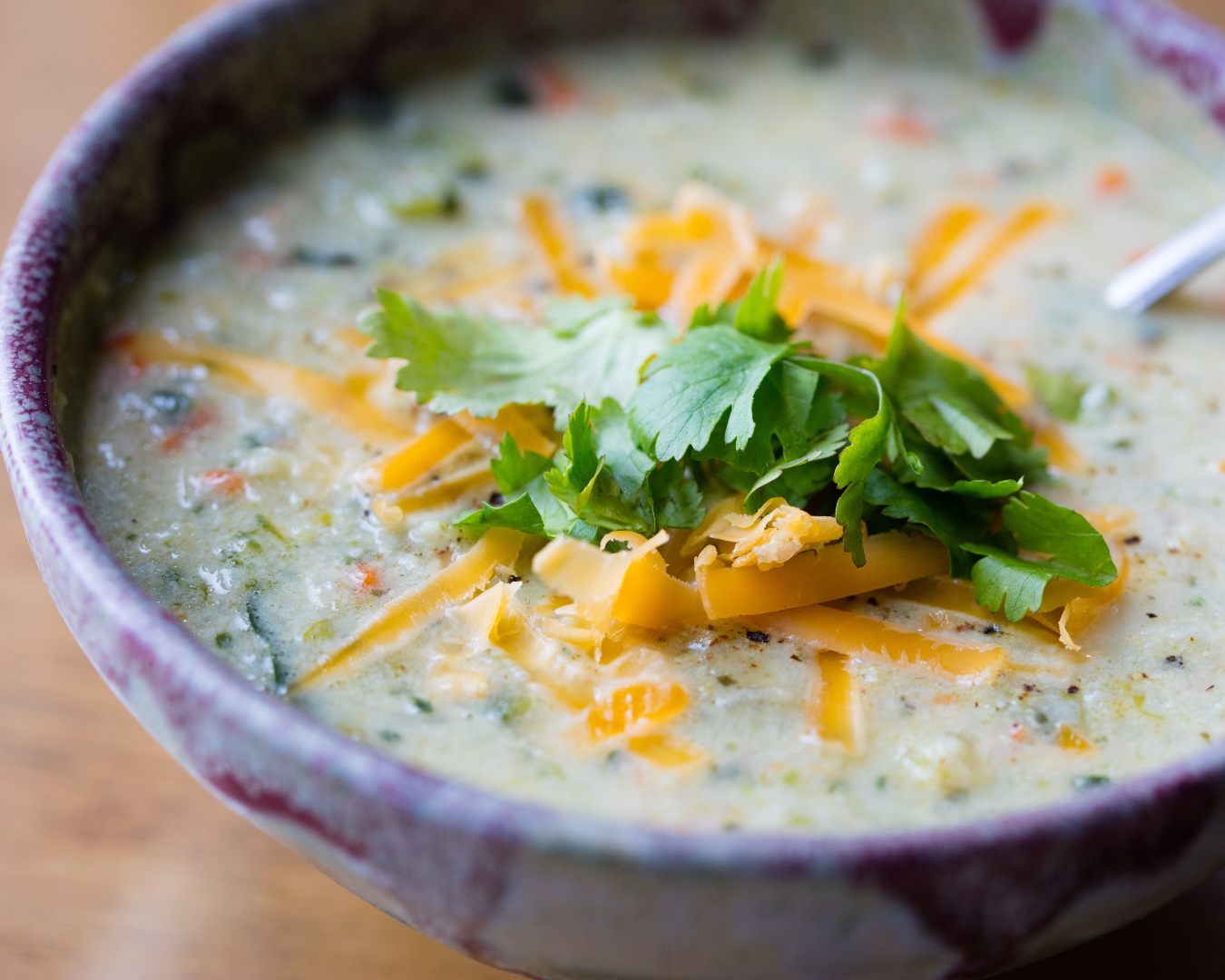
Melt some cooking fat in a large saucepan over medium heat. Add the garlic, onion, carrots, and celery. Cook, stirring occasionally, until tender (about 5 minutes).
Add in the chicken stock, cumin, turmeric, coriander, and coconut milk, and stir together. Bring to a boil; then reduce the heat and let simmer for about 15 minutes or until the vegetables are tender.
Season to taste and serve garnished with bacon and fresh dill to taste.
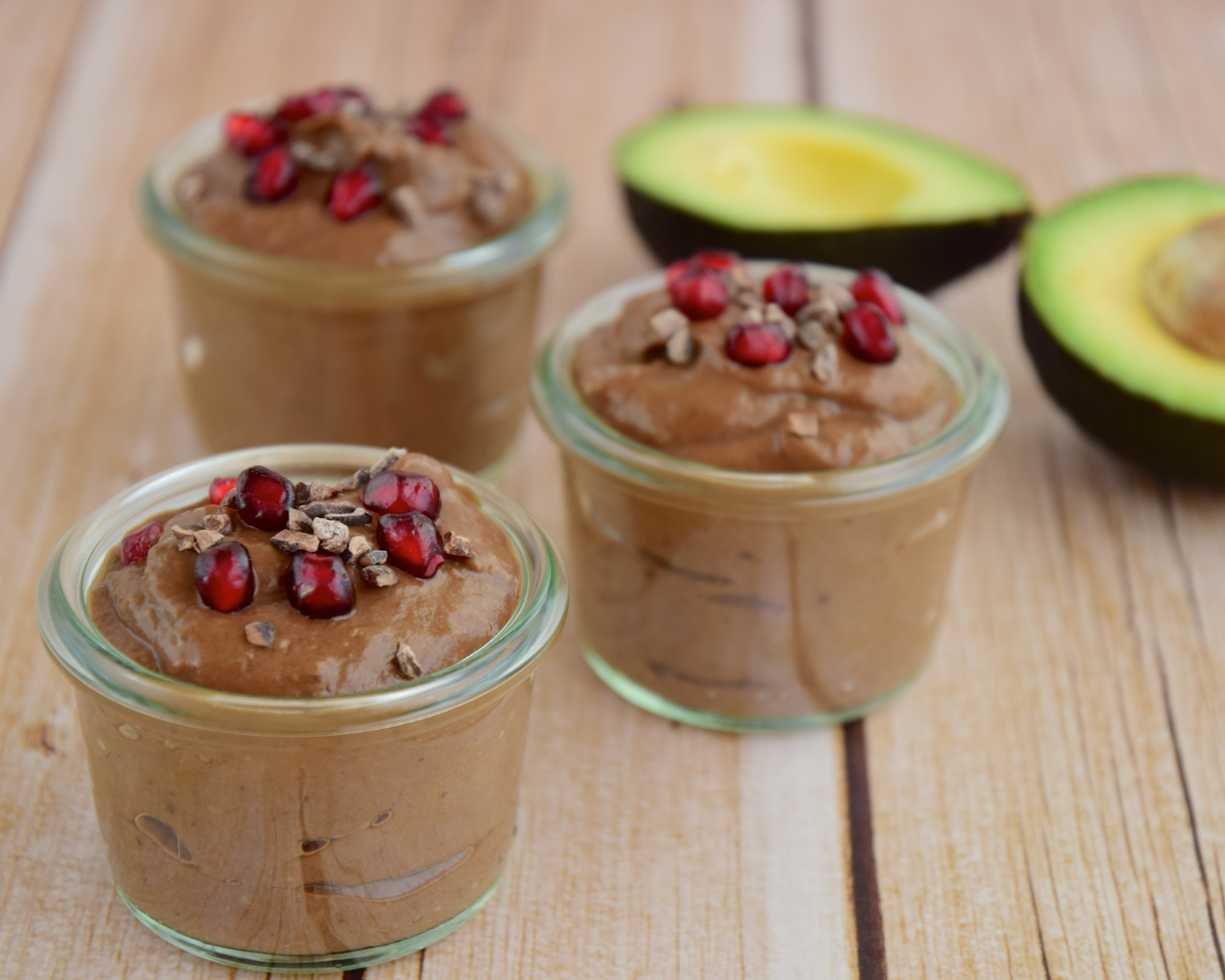
In this Avocado Chocolate Mousse recipe, feel free to experiment with the amount of cacao/cocoa and sweeteners.
Yield: 2-3 servings
Ingredients
2 ripe avocados
2-4 tbsp. cocoa or cacao powder
2-3 tbsp. grade B maple syrup
½ tsp. vanilla extract
Pinch of salt, optional
Garnish: cacao nibs, berries, chopped nuts
Avocado Chocolate Mousse Directions
In the bowl of a blender or food processor, blend avocado until smooth. Add all other ingredients, blending until mixture is uniform. Chill for about 2 hours in the fridge or half an hour in the freezer.
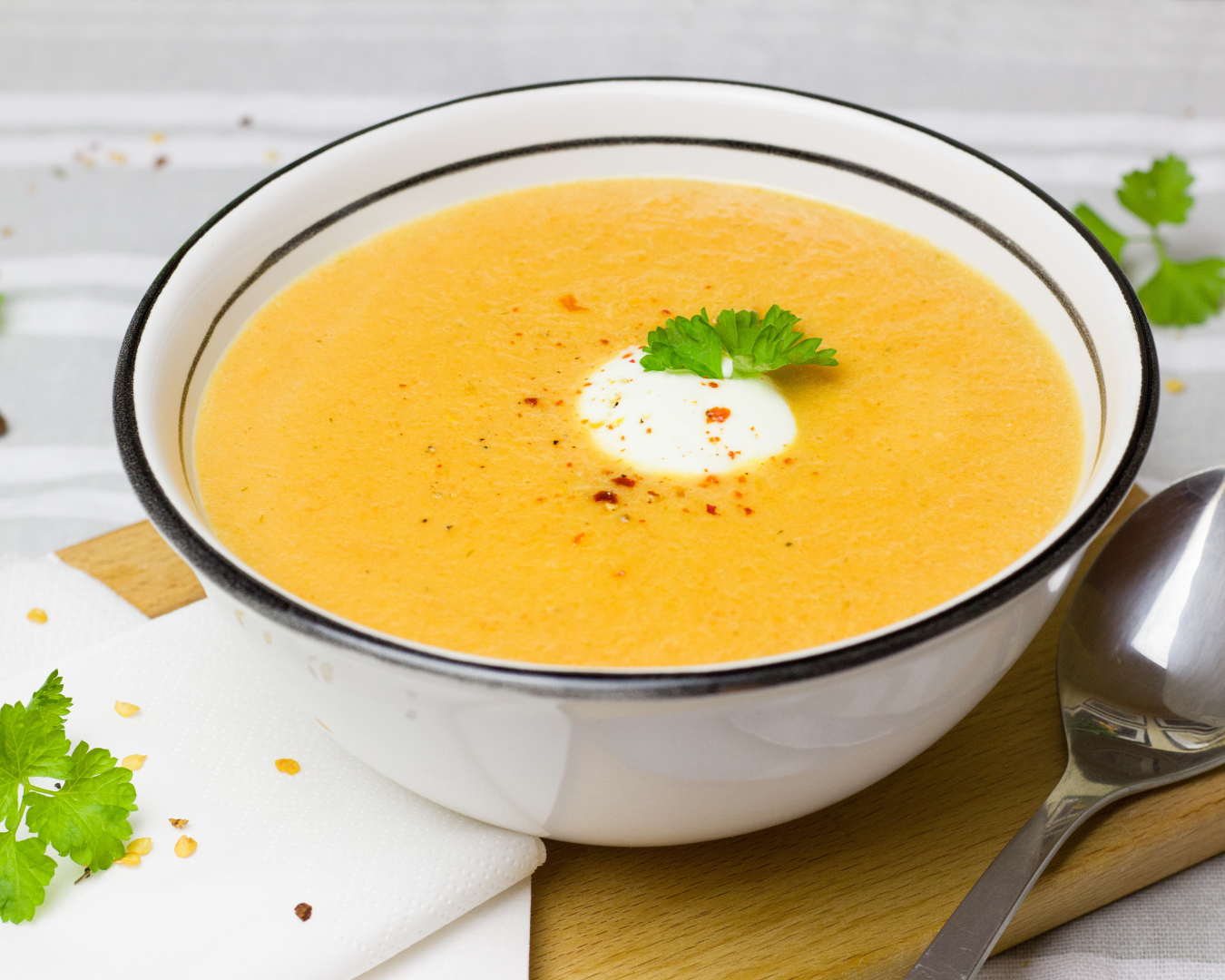
Bright, warming, and full of flavor, this Carrot Lemon Ginger Soup is the perfect blend of sweet, spicy, and citrusy. It’s a simple, wholesome recipe that’s as comforting as it is refreshing — ideal for any season.
Ingredients
2 Tbs grass-fed butter
6 cups chopped carrots
2 yellow onions chopped
2 lemon thyme sprigs (or regular thyme)
4 cups homemade broth
1.5 cups filtered water
2 tsp freshly grated ginger
fresh lemon juice to taste
yogurt or sour cream to garnish if lactose isn’t an issue salt
Carrot Lemon Ginger SoupDirections
Add butter to large pot. saute onions until soft
Add carrots for 5 mins
Add broth and water and bring to boil
Let simmer for 30mins
Add ginger and stir
Let cool and transfer to blender (or use immersion blender)
Add salt and lemon juice to taste
Garnish with yogurt or sour cream if desired
Variation: Use cilantro instead of lemon and ginger. Add a large handful to the soup before blending.
Your body is like land with a series of streams running through it. In Traditional Chinese Medicine theory (diagnosis, acupuncture, herbs, moxibustion, cupping) these streams are represented as channels of energy called meridians.
You can’t see energy (maybe under LSD), but you certainly can feel it. When you’re feeling good, you say you have “high energy,” and when you’re under the weather, you say your energy is “low.”
When a beaver builds a dam in a stream, the water flow is blocked or diverted. It’s the same with your channels of energy. Your energy can be blocked because your organs aren’t functioning at optimum levels.
Acupuncture is a method of encouraging your body to heal itself by correcting the imbalances of energy (qi or chi) in your meridian system. Your acupuncturist facilitates this healing by inserting needles in certain key locations along your meridians.
Dr. Andrew Weil, an integrative medical doctor, says the benefits of acupuncture can extend to a wide variety of conditions, from emotional disorders (anxiety, depression) to digestive complaints (nausea, vomiting, irritable bowel syndrome). It’s also useful for pain syndromes due to an injury or associated with chronic degenerative diseases such as rheumatoid arthritis.
Acupuncture is also helpful in treating neurological problems like migraines or Parkinson’s disease or as a rehabilitation strategy for individuals who suffered a stroke. Respiratory conditions, including sinusitis and asthma, have been relieved with acupuncture, as have many gynecologic disorders and infertility. Acupuncture has also proved beneficial for reducing fatigue and addictions, and for promoting overall well-being.
An acupuncturist, L.Ac., with a three-to-four-year schooling, is licensed upon completion of an exam administered by The Board of Medical Quality Assurance in California. An oriental medicine doctor, O.M.D., has obtained advanced training.
Elite Athletes Use Acupuncture
The elite athletes in the National Basketball Association have been using acupuncture for decades to protect their bodies and maximize their effectiveness on the court. These athletes use acupuncture for relieving pain, loosening muscles, and reducing swelling.
In “USA Today Sports” (Dec. 30, 2017, Alex Kennedy) Shaquille O’Neal, famously of the Los Angeles Lakers, first tried acupuncture in 2002 when his big toe started acting up before the playoffs. With his healed toe from acupuncture, Shaq led his team that year to their third straight championship. Shaq said, “I’ve always been a connoisseur of ancient medicine.”
Acupuncture for Digestive Healing
Using acupuncture for digestive problems works by reducing inflammation of the stomach, along with its related organs, the small and large intestine, and the pancreas. Acupuncture also releases and stimulates enzyme and hormone production in these organs.
After a thorough medical history, your acupuncturist will explore all factors leading up to the onset of your issues, to discover the root causes of your body’s dysfunction.
In addition to needling, your acupuncturist may prescribe Chinese herbs, supplements, and stress reduction techniques. Your acupuncturist may integrate food recommendations into your health program, which will be beneficial in the treatment of gastrointestinal problems.
Your acupuncturist may use moxibustion – a technique of applying warm mugwort to acupuncture points – while you lie in a state of complete relaxation during your treatment. This herb is used as an anti-inflammatory agent and to correct imbalances.
Cupping is another technique used in traditional Chinese Medicine in which your acupuncturist puts special cups on your skin for a few minutes to create suction. This technique helps reduce pain and inflammation, while it increases blood flow and relaxation.
Traditional Chinese Medicine can help resolve:
Ulcers
Constipation/Diarrhea
Indigestion
Food sensitivities
Inflammatory bowel conditions
Bloating/Distention/Burping
Lack of appetite/Excess hunger
General Gastritis
You will be amazed at how well your body responds to proper nutrition with energy guidance. Try it out for yourself and get back to enjoying your meals!
This is where a food processor with the grater attachment comes in handy for making a Detox Salad!
Grate all of the below:
1 apple (preferably green)
2 Carrots
2 Celery stalks
1 Medium Beet
zest of 1 lemon
juice of 1 lemon wedge
Mix together and enjoy your Detox Salad!
Apple – contains malic and tartaric acids which inhibit the growth of ferments and disease-producing bacteria in the digestive tract. Pectin removes bad cholesterol and toxic metals. Cleansing for the liver and beneficial for the gallbladder
Carrot –Improves liver function and stimulates the elimination of wastes. Also eliminates putrefactive bacteria in intestines that cause poor assimilation
Celery – Calms and aggravated liver, improves digestion, purifies the blood, and clears digestive fermentation. Combining celery and lemon has been used in the past as a remedy for colds and headaches
Beet – purifies the blood, aids the liver, moistens the intestines, and helps stop constipation
Lemon – Destroys putrefactive bacteria in both the intestines and mouth, aids in digestion, cleanses the blood
You’ve just eaten lunch and rather than feel a satisfying fullness, you feel a burning pain in your lower chest—what we commonly call “heartburn.” No problem you think. The tv ads say when you “feel the burn,” just pop a Tums, or down some Alka Seltzer, acid-neutralizing aids.
Those remedies work for a while, but soon you find they don’t help. So, you consult your doctor, who tells you to take an acid-suppressing drug like Prilosec. Your doctor tells you to take this drug because if you just suppress acid enough, you’ll beat back acid indigestion.
Although you don’t feel the burn anymore, you might still be experiencing bloating, diarrhea, constipation, flatulence, or burping – common symptoms of dyspepsia, or upset stomach. But, there are drugstore remedies for these maladies also, and you partake.
What’s Wrong with this Picture?
In his book, “Why Stomach Acid is Good for You: Natural Relief from Heartburn, Indigestion, Reflux & GERD,” Johnathan V. Wright, M.D. explains that acid-neutralizing and acid-suppressing drugs are not a cure as conventional medicine claims, but rather a stop-gap measure that ultimately can do your body grave harm.
To understand why this is true, you must focus on how your body works.
Your Digestive System
After you chew your food it makes its way down the esophagus, a tube passageway that deposits the food into your stomach. In your stomach the food is broken down, by both mechanical and chemical processes, so that nutrients can be extracted, absorbed into your bloodstream in the intestines, and distributed throughout your body.
If all systems are in good working order, your body uses all the nutrients from the food that you eat and you maintain good health. But, if the digestion cascade of events is compromised, the nutrients are not sent out to the right locations. It’s then that serious problems can arise, such as malnutrition, which can then lead to anemia, osteoporosis, cardiovascular disease, mental illness, insomnia, rheumatoid arthritis and more.
What goes Awry?
As counterintuitive as this may sound to you at first, you feel the burn because you have too little stomach acid, not too much! Yes, acid is causing the burn, but it’s because your stomach’s mechanisms aren’t functioning properly, not because you have too much acid in your stomach.
Here’s how it works. There is a loss of acid-producing cells in the stomach lining. This can be linked to:
Age. Increasing age causes a fall-off in acid production, affecting more than 30% over 60, upsetting the acid/alkaline pH balance.
Missing nutrients that help create the hydrochloric acid
Irritating Foods
Other illnesses
Prescriptions drugs
Acid-suppressing drugs
Overeating
Stress
So, what happens when there isn’t enough acid in the stomach? Eventually the function of the Lower Esophageal Sphincter (LES) is compromised. The LES is located at the entrance to your stomach at the end of the esophagus.
When it is functioning properly the LES closes as soon as the food is finished passing through the esophagus. If the LES doesn’t close all the way, acid from undigested food in your stomach will pass up into the lower region of the esophagus, irritating the delicate tissue lining, causing the burn you identify as acid indigestion.
But why doesn’t the LES close properly? At the other end of your stomach sits another valve called The Pyloric Valve. This valve controls the flow of partially digested food as it moves from your stomach into your small intestine.
If your food isn’t being digested properly because there isn’t enough acid in your stomach to do the job, the Pyloric Valve doesn’t open in a timely manner. Your partially digested food sits in your stomach much too long, sloshing around, backing up and pushing against the LES, working away at it until it weakens, causing it to open at the wrong time.
☼
The Cure for Acid Indigestion is to Replace the Lost Stomach Acid
Antacids and acid-suppressing drugs are a temporary fix to a serious problem. Conventional medicine often just deals with symptoms. I deal with cures.
By replacing the missing stomach acid with capsules containing Betaine Hydrochloric Acid, stomach acid, with every meal, you will regain normal stomach function, thereby eliminating acid indigestion a natural way. Betaine Hydrochloric Acid complements your body’s function thereby creating a healthy digestion cascade of events, repairing your stomach.
The body is always trying to heal itself, if you work with it with the right vitamins, minerals, food, and other complementary treatments.
Waiting time: 1 week- (if impatient), 1 month best
Ingredients
1 large green or purple cabbage
1 tablespoon Real salt or Celtic Salt
Filtered water as needed optional
1 tablespoon caraway seeds optional (or, handful dill, or other herbs)
Basic Sauerkraut Directions
Rinse cabbage to just remove noticeable dirt. Slice into thin shreds or small pieces, to your preference, with a knife by hand or with a food processor. You may add caraway seeds.
Mix cut cabbage thoroughly with the salt in a large bowl (metal is best) to blend. You may cover with a towel and let mixture sit for about 15 minutes to allow salt to begin the process. Use hands or a wooden pounder to massage crush the leaves until the juices begin to flow
Pack the wilted cabbage tightly into your wide mouth jar, or into crock. Press cabbage down with hands or wooden pounder so liquid rises at least 1 inch above. Make sure there is at least 2 inches of space below lid.
You can add a little filtered water if not enough liquid has been produced.
Screw lid on but not too tight, as gases will be produced and may need to be ‘burped’ daily. Or use an airlock, as used in beer making with special glass container. , www.makesauerkraut.com/fermentation-lids/.
Place on a plate, in case there is spillage, and place in dark corner or cupboard for at least one week. When you are satisfied with the taste you may place in the refrigerator. Enjoy alone or as a condiment to your entrees.
There are many creative ways that you can enhance simple sauerkraut with additions of 1/4 or less (of the cabbage) of any veggie shredded or chopped; fennel, purple onion, carrot, raddish, etc. Be creative and experiment.
The digestive process begins in the mouth, which is the first step of the digestive system. When a person sees, smells, and starts chewing food, digestive juices from the salivary glands begin to be released in the mouth and a signal is sent to the stomach to begin releasing its juices. This explains the importance of chewing your food well, releasing more digestive enzymes to assist the mechanical breaking down process.
When the mouth is finished with its job of reducing the food into a mass (bolus), the mass moves down through the esophagus to the stomach. This is a key area for protein and connective tissue digestion, destruction of parasites, yeasts, viruses, bacteria, and general disinfection. If the stomach acids (hydrochloric acid- HCL) are not strong enough (1.5 -3.0 ph), pepsin and gastrin will not be activated, proteins will not be broken down into the right form and the mass of bad pathogens will make their way into the inner chambers of the body.
HCL is rather important in its function within the digestive system.
Most people are low in HLC. The co-factors to make this key ingredient are zinc, B1, B6, and vitamin C. These co-factors are often depleted in most people.
What happens with undigested proteins?
The small intestine is the place where the nutrients are passed into the bloodstream. When the stomach acid gets to a certain low point the pyloric valve opens to allow the mass, now called chyme, into the small intestine. If the acid is not low enough, and the pyloric valve is not signaled, the next round of food will push the earlier chyme (digested or not), through the valve into the small intestine. This is where the trouble begins.
The proteins are meant to be in a microscopic form and absorbed through the macrovilli and villi of the intestinal walls without disrupting them. The short and medium-chain fatty acids are absorbed right into the bloodstream. The long-chain fatty acids require the assistance of bile before they can be absorbed. Carbohydrates are broken down into glucose molecules and then absorbed here as well. But the proteins that are mis-formed, and too large, confuse the whole process. These are no longer nutrients, they have turned into troublemakers and weaken the epithelial lining of the intestinal wall creating a “leaky gut syndrome”.
The immune system does not recognize proteins in this new form and reacts by causing the immune system to produce antigens and trigger an immune response. This immune response is what causes inflammation in the body. When this begins to happen repetitively, the immune memory system becomes confused and the proteins begin to resemble the molecular tissue structure of the body. Self-tolerance begins to break down and the body begins to attack itself. The inflammation cycle permeates the body.
Bacteria gone awry, viruses, fungus, parasites and other pathogens that did not get destroyed by the stomach acid end up in the large intestine where they will begin to populate. The large intestine is a place where the microbiome (the bacterial population), plays a role in the immune system. There must be a balance of the duties that each bacteria is responsible for. The so called “bad bacteria”, even have a job to do, they have just gotten out of control. In the colon, the friendly bacteria is meant to nourish the walls, produce vitamins such as Vitamin K, B1, B2, B12 and butyric acid.
Unfortunately, if the misguided bacteria begins to overwhelm them, the beneficial bacteria can no longer do their jobs. This results in dysbiosis, when the pathogenic bacteria is in charge and outnumbers the friendly beneficial bacteria. The immune system is overwhelmed. Immune is also dealing with the inflammation from the antigens and it does not have the assistance of its army to put out so many fires throughout the body. This is how autoimmune disease begins.